
Message from the AIAO LAC Resiliency Subcommittee Chair

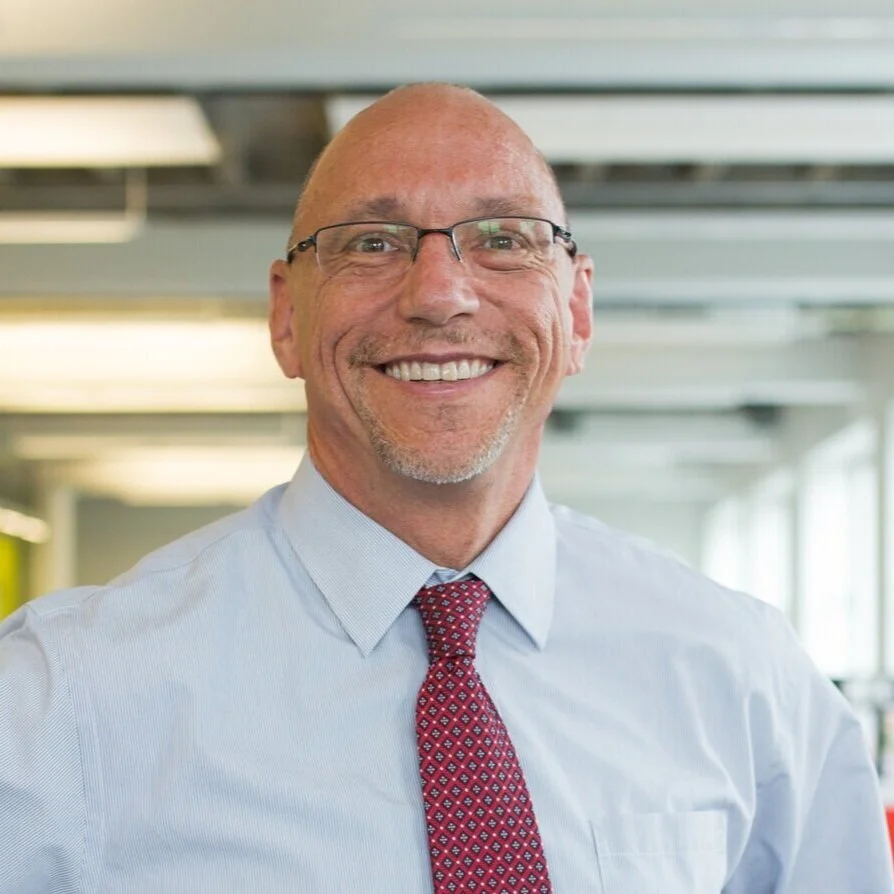
Jay Raskin.jpeg
 

Jay Raskin, FAIA
AIAO LAC Resiliency Subcommittee Chair
Tsunami Inundation Zone Development

As an architect whose practice has been centered on the Oregon coast, I became very active in issues dealing with a Cascadia earthquake and tsunami. This started with helping Cannon Beach, where I lived, as a volunteer with emergency planning. As I realized the impacts such an event would have on the built environment of not only the coast, but the entire state, my focus shifted to pre-disaster mitigation and resilience efforts. I have done this as an elected official and as a member of various city, state and national committees, including the Oregon Seismic Safety Policy Advisory Commission and the National Institute of Standards and Technology (NIST) Community Resilience Panel. I helped initiate and create the Oregon Resilience Plan (ORP). I have been active with AIA Oregon’s legislative efforts to create a State Resilience Officer position (which was a key recommendation of the ORP) and passage of HB 2206 in 2019, which created OrSAP the post-disaster building Safety Assessment Program.  

The beauty of the Oregon Coast is partially defined by the Coastal Range and the steep hillsides that meet the Pacific Ocean.  The result is relatively narrow swathes of land for development.  Most of the coastal communities were developed close to the ocean because that is where the developable land is.  A lot of this developable land is located with the tsunami inundation zone.

Laws were enacted in the 1990’s that restrict the placement of schools, hospitals, police and fire stations, and assembly spaces with more than 500 occupants (i.e. larger hotels) within the tsunami inundation zone.  This was a fundamental part of the resiliency planning in Oregon.

In 2019, the Oregon legislature passed a bill that loosened the restriction on development in the tsunami inundation zone.  This was a result of a bipartisan effort of the coastal delegation within the legislature and motivated by economic development concerns.  After passage, the bill has come under attack because it didn’t adequately address safety standards.  However, it is important to stress that the legislature passed the bill.

The response from the coastal delegation is HB 4119, which incorporates design and engineering standards from ASCE (American Society of Civil Engineers) 716, chapter 6.  This chapter is relatively new, and significant as it is the first nationally recognized standard to guide the design and engineering of buildings within the tsunami inundation zone. 

Incorporating a safety standard to govern the design and engineering of buildings located within the tsunami inundation zone improves the legislation passed in 2019, however the broader question remains: how to balance safety and development in Oregon’s coastal communities within the tsunami inundation zone?  I, along with many of my colleagues, believe this bill is flawed on a number of levels.  However, this bill is part of a package of resiliency related bills, and the politics of one is related to the politics of others.  AIA Oregon is neutral on the HB 4119 due to our overall support for the resiliency package, but even the bill’s sponsors are expecting further legislation on this issue next session.

For architects to make a difference on this issue, and any issue we care about, we need more actively engaged members.  If you want to get involved, please contact me, AIAO Legislative Affairs Committee (LAC) co-chair Kim Olson, or AIAO EVP/CEO Curt Wilson (cwilson@aiaoregon.org).

Message from the AIA Portland Section Director

Wright_headshot.jpg
 

Jennifer Wright, AIA
AIA Portland Section Director

Hello, as Portland Section Director I have the privilege of taking over the reins from Nic Smith who did an outstanding job navigating the initial transition to a statewide chapter. I am excited to be part of a motivated group of individuals, both at the local and state level, that are helping move the organization forward and broaden our professional community of AIA members and allies. I have been involved with the Portland chapter, now section, initially as an AIA associate and then more recently as a licensed architect for over a decade.

In 2012 Helene Combs Dreiling, the incoming president of AIA National, spoke at a lunch hosted by the AIA Forum for Women In Architecture & Related Design or the ForWARD Committee. That lunchtime event proved a turning point for me, as I was in a crossroads of my career. A mother of two young kids and a decade into my career, I was feeling overwhelmed and craved purpose. Helene was a charismatic speaker, emphasizing the responsibility that architects have towards society and the built world. She also highlighted the importance of following through and getting licensed, an effort that I was personally struggling with at the time but eventually I persevered. This was also my first exposure to the ForWARD Committee, and I was attracted to the female camaraderie and advocacy evident in the group. From that point on I was a committed member of ForWARD and stepped up as chairperson in 2016, taking over for Amy Vohs - current AIA Oregon president. In my three-year tenure, I was proud to have worked alongside a group of volunteers committed to moving the needle towards parity in the profession. Through efforts like FastForWARD, an annual storytelling event featuring presenters illustrating 20 slides in quick succession, or Lunch with a Leader, we strove to give women in the profession a platform to mentor and lead. After the launch of the annual Future Vision Symposium in 2017, a full day event bringing together industry professionals to discuss topics about equity, diversity and inclusion; it was clear that it was time for the committee to transform. From its founding, the mission of the ForWARD Committee was to support women in the AEC industry; attempts to broaden its audience to include all under-represented groups under the same name proved confusing. Therefore, in 2018 the ForWARD Committee was retired and the Committee for Equity, Diversity and Inclusion (CoEDI) was introduced with a broader mission aligned with the AIA National Equity & The Future of Architecture Committee efforts. As Section Director I look forward to supporting the fourth installment of Future Vision in September, focusing on the topic of Intersectionality.

Aligned with re-organizing as a State chapter is the need to share & disseminate the important content that is being created by the committees. One of the main long-term goals of the organization is to share events like Future Vision with other sections through advancing video technology and mobile programming. Last month’s 2019 OSSC Update code seminar, with its 200 registrants across 8 locations, proved to be a fantastic kickoff for this ambitious goal. One of the main tasks of my role is to look at our programming with this lens towards promoting further inclusivity and advancing opportunities for statewide connections. For this reason, we will be asking for member’s help in organizing a steering council to assist in evaluating the Portland section’s ongoing efforts for relevancy and need. With your perspective and insight, we hope to keep generating events and content that are of value to our professional community. If you are interested in getting involved in the steering council, stay tuned for more information in the next couple of weeks.

Being part of the upcoming steering council is only one of the many ways you can get involved in the AIA. Along with CoEDI, there are three active Portland section committees that would benefit from your collaboration: the Emerging Professionals Committee (EPC), Committee on the Environment (COTE) and Small Firm Exchange (SFx). The committees host monthly planning meetings, as well as events throughout the year. In conjunction with the other Oregon sections, we will be hosting a committee open house at the beginning of March. This is a quick and casual way to learn about the committee’s missions, meet volunteers, see what events are being planned and find ways to engage. As I begin this role as your Portland Section Director, I look forward to meeting you and helping AIA members and their allies find the types of connections and purpose through the AIA that I have personally found invaluable in my architectural career.

Message from the AIA Oregon Executive Vice President

Curt.jpg
 

Curt Wilson, AIA
AIA Oregon Executive Vice President

I hope the year is going well!

During the October 2019 Strategic Planning Retreat, we identified the need for new ways to engage members across the state in order to increase the level of learning and sharing of the issues that will impact how we practice, serve our clients, and grow as professionals.   I want to stress the phrase “learning and sharing”, which could be “learning from sharing”.  This thought lead to the idea of more panel discussion-based events with break out discussion components to create more opportunities for interaction and engagement from all participants.  By the way, you can read more about the strategic initiative process in this newsletter.

We are planning on panel discussions that connect all sections together in May, August, and November.  The panel discussions will be organized around topics, and the topics have evolved into quarterly themes for the year.  Our 2020 President, Amy Vohs, AIA, discussed this briefly in her message on 01.9.2020, and I want to provide you with more information. 

The themes are:

Quarter 1:  Policy and Advocacy

Quarter 2:  Emerging Technologies

Quarter 3:  People and Culture

Quarter 4:  Climate

As noted above, the panel discussion events will focus on these themes.  We’ve selected the quarter for these themes to align with some of our events.  For instance, Future Vision, organized by the Committee on Equity, Diversity, and Inclusion is held in September, which is the third quarter.  The Green Champion Summit, organized by the Committee on The Environment is held in October during the Sustainable Building Week in Portland, which is in the fourth quarter.

In addition, the quarterly themes create a framework for other events that need to be planned through the year.  The expectation is that the committees that plan regular monthly, or near monthly, events such as the Emerging Professional Committee will reference the themes as they are considering the content for their events.

We will be rolling out more information on our website about our schedule of events for the year and the committees that are working on them. We’ll also discuss what they are planning in upcoming features in the weekly Thursdays@Three.

If you have questions or comments about what we are doing, or want to learn about how you can get involved, please don’t hesitate to contact me .

Sincerely,

Curt Wilson, AIA
AIA Oregon EVP/CEO
cwilson@aiaoregon.org